
Divorce Financial Forecaster
Get a preview of your post-divorce reality.
Take our 10-minute quiz to get a FREE personalized, downloadable forecast of your post-divorce finances.
- Weigh your options for the family home
- See how property and debts get divided
- Estimate spousal support (alimony)
- Understand whether you'll be OK financially
Where should we send your forecast?
† By checking this box, you agree to receive text messages from Onward, including a link to your financial forecast. Message frequency varies. Message and data rates may apply. Reply STOP to unsubscribe.
Your privacy matters: we only use your contact info to save your results and send helpful resources. We never share your information. You can opt out at any time.
About Your Situation
This helps us determine which laws apply and how assets are typically divided. Questions marked * are required.
Example: Their first name, a nickname, or simply Spouse
Income
This helps us estimate what day-to-day life could realistically look like after divorce. Enter gross (pre-tax) income and we'll calculate your estimated take-home pay.
Your Income
Bonuses, freelance, benefits, pensions, social security, etc.
Spouse's Income
Bonuses, freelance, benefits, pensions, social security, etc.
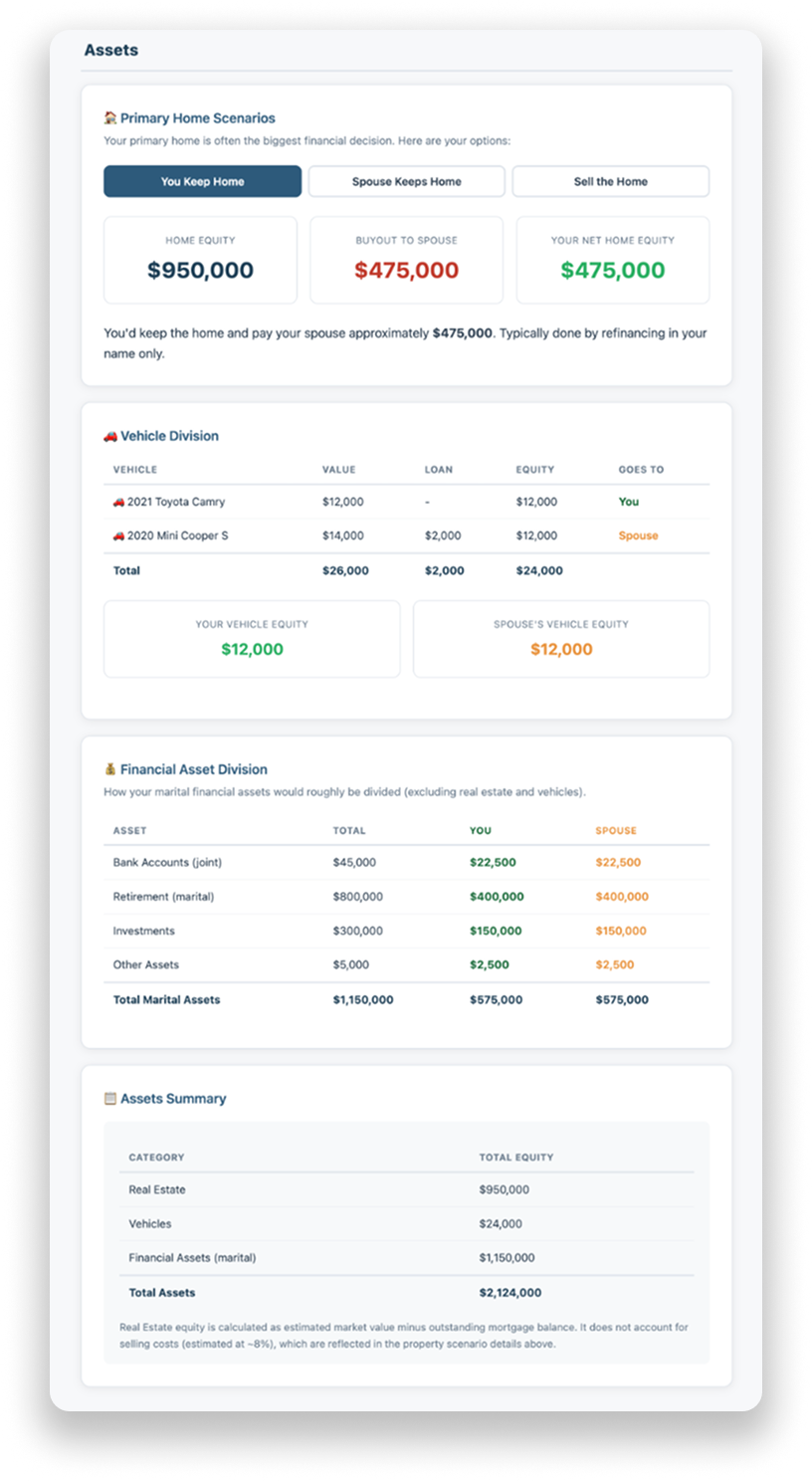
Real Estate
Each property is modeled under several scenarios. If you rent your home, leave it out.
Vehicles
Automobiles, motorcycles, boats, RVs, trailers, and ATVs all count. Leased vehicles do not.
Financial Assets
Accounts and other items of value. Retirement accounts come on the next screen.
Pre-Nuptial Agreement
If you have a pre-nup, your actual financial outcomes may differ significantly from these estimates. Your report will include a reminder to have it reviewed by a family law attorney.
Bank Accounts
Investments & Other
Rough estimates are fine here. You can always update these later.
Business Interests
Retirement Accounts
Include 401(k), IRA, pension, and similar accounts. Only the portion accumulated during the marriage is typically divided. Retirement savings you had before getting married stay yours.
Debts
Include all outstanding debts. Debts accumulated during the marriage are divided just like assets. Mortgage balances are already captured in the Real Estate section.
Credit Card Balances
Student Loans
Other Debts
Monthly Expenses
Roughly estimate what your household currently spends each month. No need to be precise down to the dollar. We'll project your individual expenses after divorce. In many states, these numbers also affect spousal support. Health insurance is captured on the next page.
Housing
Monthly costs for your primary residence.
All Other Expenses *
Excluding housing above and health insurance. At least one figure here is required.
Health & Life Insurance
Insurance can be a major factor post-divorce, especially health coverage.
Health Insurance
Life Insurance
Child Support
California sets child support with a published formula, and courts follow it unless someone shows the result would be unjust. A few more answers and we can show you where you land.
Parenting Time
The biggest lever in the formula. Equal time is about 183 nights, every other weekend is closer to 52 nights.
Monthly Costs & Obligations
Leave any of these blank if they do not apply, or you're not sure.
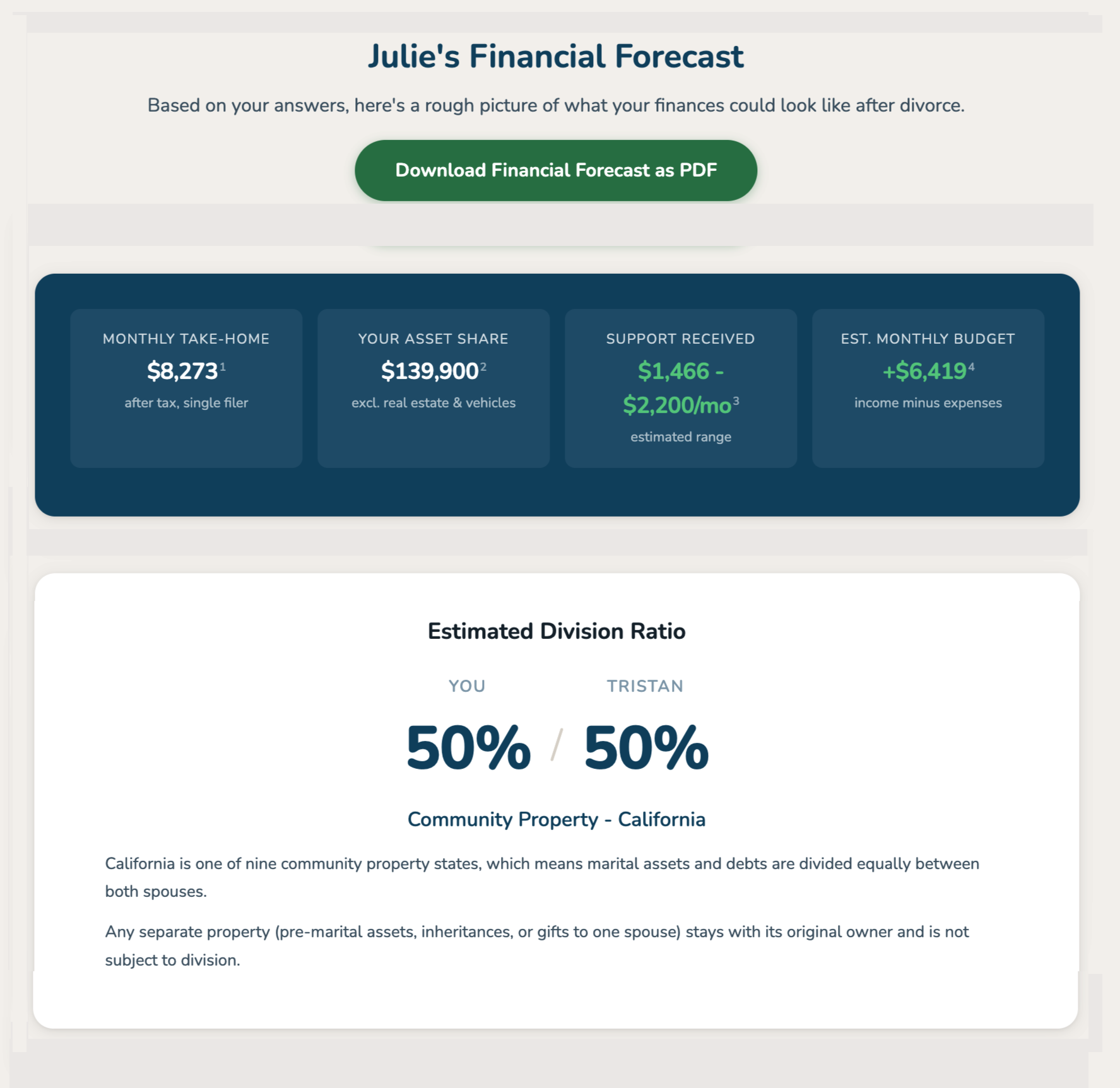
Your Financial Forecast
Based on your answers, here's a rough picture of what your finances could look like after divorce.
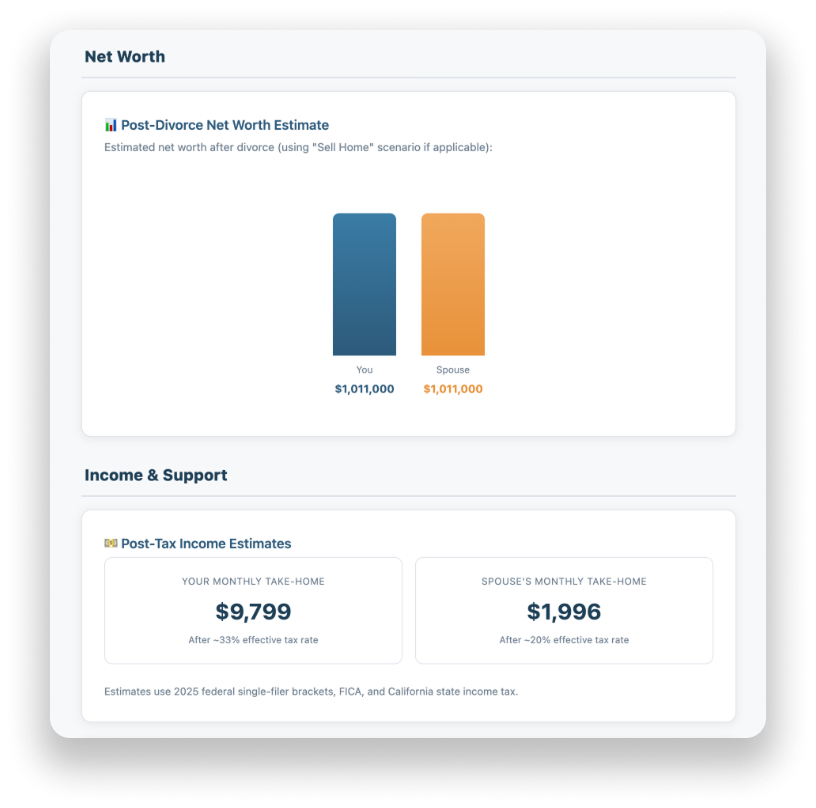
Post-Divorce Net Worth Estimate
Post-Tax Income Estimates
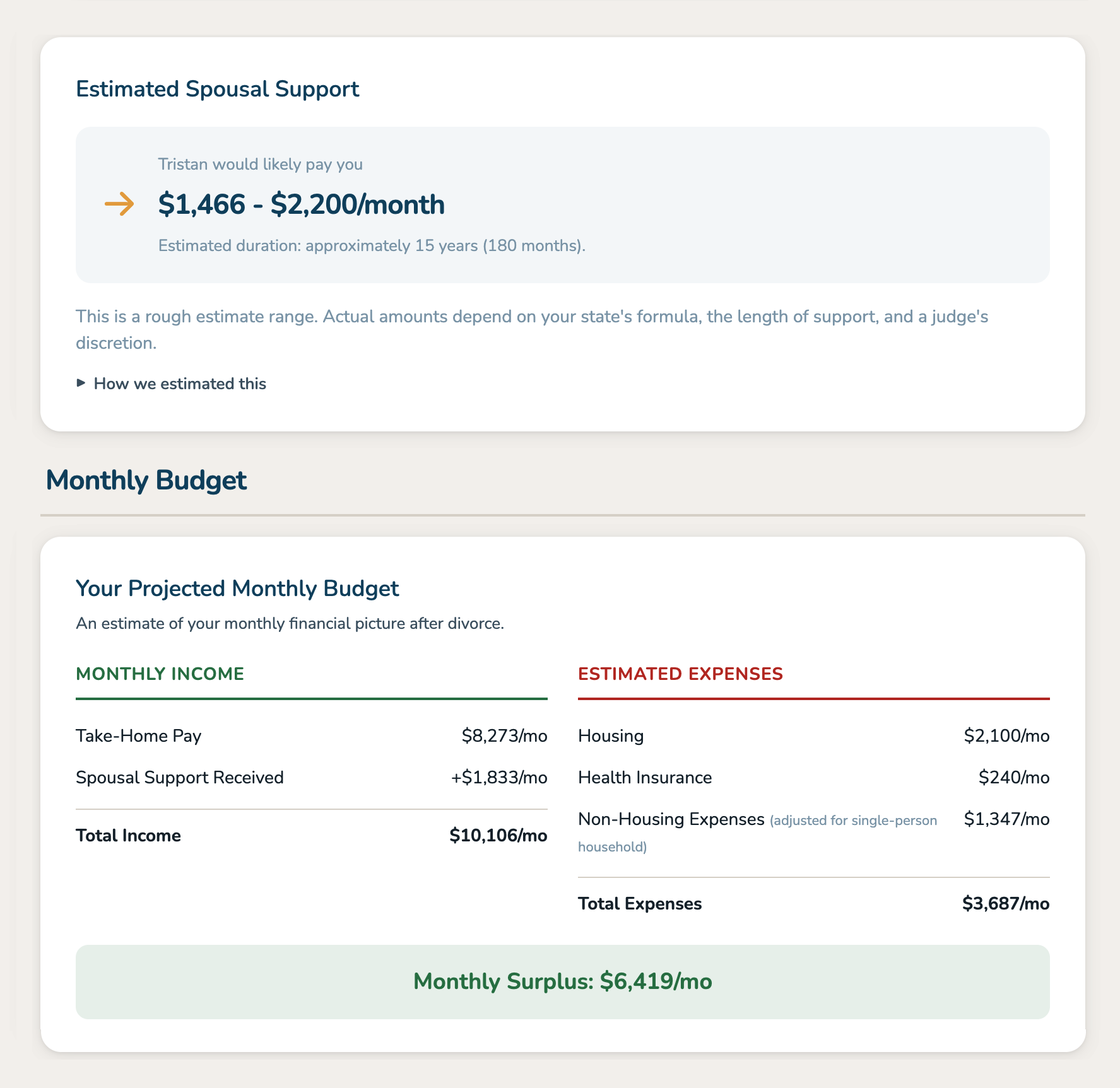
Estimated Spousal Support (sometimes called alimony)
Your Projected Monthly Budget
Insurance Considerations
Looking for additional support?
Onward regularly adds new resources and tools to help with the complex and stressful financial aspects of divorce.
Visit Onward